


Over the past fortnight, major media outlets such as CNN and the BBC have devoted significant attention to what they describe as a new Ukrainian offensive. But the new campaign this time, is not on the front lines. It is about the growing and incessant use of Ukrainian drones and missiles to attack Russian energy infrastructure and logistic chains, Crimea and inside the Russian homeland itself.
Many of these commentators say these attacks are doing huge economic damage to Russia, fundamentally changing the course of the war and even threatening the stability of Vladimir Putin’s position within the Kremlin, by disrupting fuel production and distribution to such a level that it is insatiable for the Russian population to withstand any longer, or so the argument goes. There can be little doubt that Ukraine’s long-range strike campaign has proven a remarkable return on investment, inflicting disproportionate damage to critical infrastructure nodes at relatively little cost. Rationing and other policy decisions have already been implemented to restrict Russian civilian petroleum supply in favour of military supply and Russian gasoline production has already fallen by 25% year on year, causing a fear that the Russian war effort is on the verge of collapse.
However, this conventional wisdom is at best unlikely to occur and at worst, purely misleading. It is the information that these commentators omit that is the most important factor, when considering the future outcome of this conflict, and Ukraine is suffering twin crises that put it in a disadvantaged position for the next phase of this conflict.
The reality on the battlefield
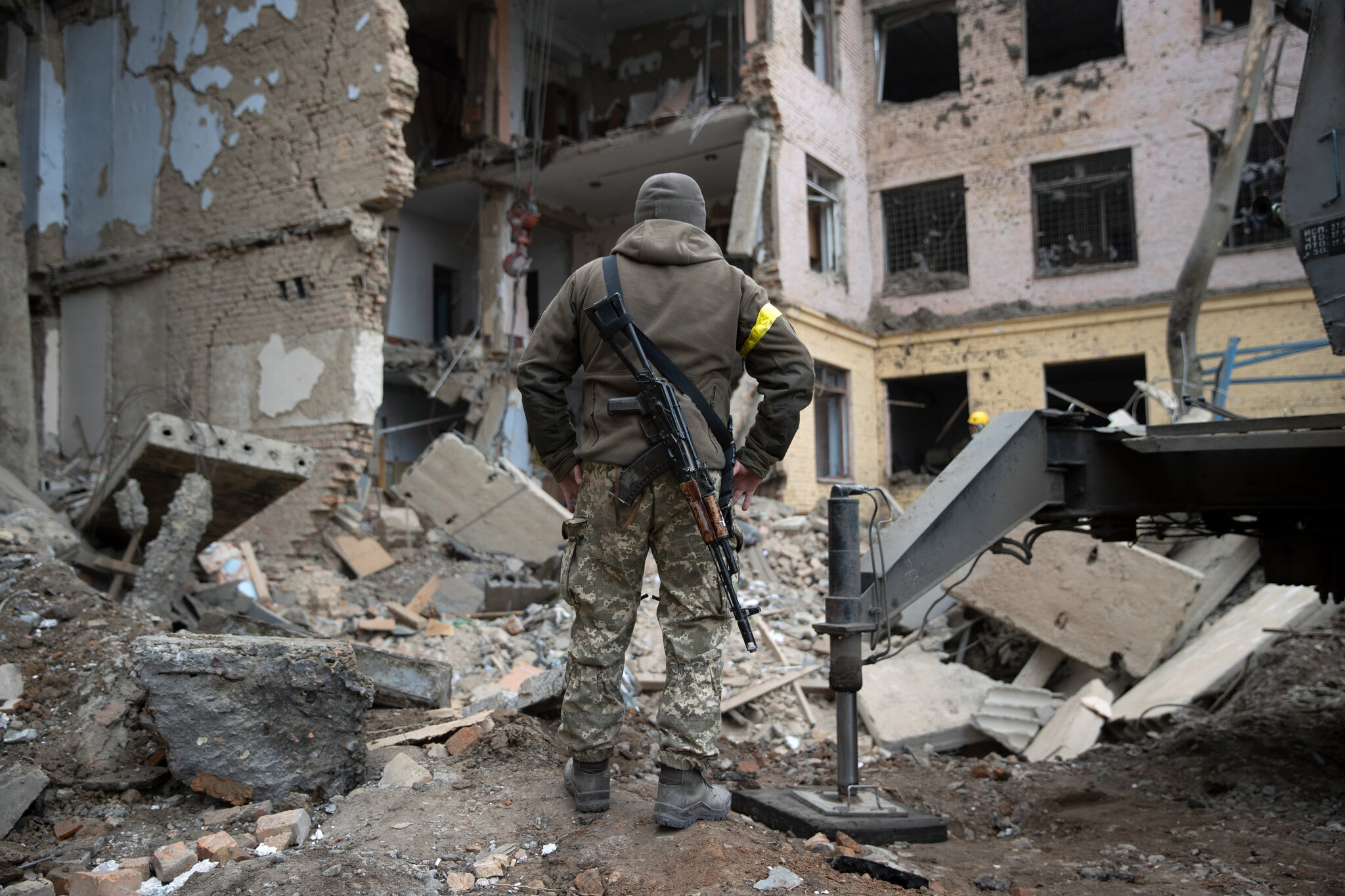
The most consequential factor in determining Ukraine's future is the battlefield reality. The Russians have made relatively small, but consistent gains across key areas of the front line over the past couple of months.
They are close to fully annexing the Donbas region, with only a couple of key cities left under Ukrainian control. For instance, the city of Kostiantynivka is one of the last remaining integral cities in the Donbas, and it has recently been largely encircled, with much of the surrounding area now under effective Russian control. It is clear that Putin's end goal is to capture the remaining cities of Kramatorsk and Sloviansk as this is not only strategically important for the Russians but also politically essential. A fully seized Donbas region would leave little doubt as to the status of the Donetsk and Luhansk oblasts when they eventually come to the negotiating table. The capture of these cities would also overcome key geographical obstacles, such as the region's river lines, and provide the Russian military with a much more permissive environment for further offensive operations.
The problem with the Ukrainian strategy is that it has too long relied on territorial gains measured in kilometres rather than focussing on the strategic importance of those kilometres. The Ukrainians have prioritised taking ground in strategically unimportant towns and front-line positions, leaving themselves dangerously exposed to Russian offensives elsewhere along the line, a fact that the new defence minister, Mykhalio Fedorov, has openly admitted. We saw this during the infamous Kursk offensive, and it is also a major factor behind Kostiantynivka and its effective encirclement. Both military missteps are examples of utilising men, money and munitions with the hope that the greater offensive momentum and battlefield progress would give Ukrainian allies a larger impetus to further support the war. Yet, both examples of divergent resources ironically led the Russians to take more strategically important territory, and ultimately a better battlefield position.
The manpower shortage on the Ukrainian side is stark. For the first time since the start of the war, the Ukrainian defence minister has also stunningly admitted that over 200,000 Ukrainian Army troops have deserted their posts and that Ukraine is running short on soldiers to mobilise. While optimists and much of the pro-Ukrainian media have dismissed this reality and instead focused on the technological advancements of the Ukrainian military, manpower remains the decisive factor in determining the outcome of the conflict. While the Russians have certainly suffered as many, if not slightly more, casualties so far in the war, they possess a much larger mobilisation base, and this is a decisive advantage in attritional warfare. While the realist school of thought has generally argued that Russia should have made greater gains by now, it is this asymmetry in manpower that has likely shaped Putin's wartime strategy. Knowing you can outlast your opponent, why launch large, risky offensives when you can simply bide your time and bleed the Ukrainians white?
The capability and ammunition problem is also beginning to worsen on the Ukrainian side. It has been widely reported that Ukraine is running very low on Patriot PAC-3 interceptor missiles, which are used to counter Russian medium and long-range strike capabilities. This is largely because the United States' supply chain is being stretched ever thinner as American foreign policy increasingly prioritises operations in the Middle East, pushing Ukraine further down the queue for these critical defensive systems. This has left Ukraine more vulnerable to Russian long-range strikes, a vulnerability that the Russian military is exploiting by targeting Ukraine's own fuel and logistics infrastructure. No matter how many sections of the Western media want us to believe that Ukraine is winning, this is not borne out by the reality on the battlefield. While the Russians are slowly building momentum and have made only limited advances over the past year, this is simply a feature of a larger war of attrition, one that Russia appears more likely to win and Ukraine to lose.Ukraine is at risk of losing key foreign support
Last week, German federal prosecutors filed charges against Serhii Kuznietsov, a Ukrainian national alleged to have been responsible for the explosions and subsequent destruction of the Nord Stream pipelines in September 2022, the largest act of industrial terrorism in history. It is alleged that he, along with other Ukrainian nationals, likely acting on behalf of the Ukrainian government, committed an act of sabotage. This is likely to place an awkward, if not outright damaging, strain on relations between Germany and Ukraine.
Germans were already becoming wary of sending extra aid to Ukraine, with 52% apparently backing Ukraine relinquishing territory to Russia as part of a peace treaty, a figure that has undoubtedly climbed since 2025. The Ukrainian question is increasingly dividing German society. Although the flow of Russian gas had already been halted, the significance of damage to the Nord Stream pipelines is huge. Many experts believe the damage is too extensive for them ever to be made operational again, representing a major blow to Germany's long-term energy options.
While it must be said that the alleged sabotage operation was a tactical masterpiece, it may ultimately prove to be a strategic blunder for Ukraine. With the pipelines capable of generating Russia an estimated $19 billion annually at full capacity, it can be argued that their destruction damaged Russia's long-term economic interests, even if they were already inactive due to EU policy. Germany, by contrast, is likely to view the billions invested in constructing the pipelines, along with the opportunity cost of future Russian gas imports, as a significant loss, particularly if that damage was caused by an ostensible ally. Germany remains by far the largest European contributor of military and financial aid to Ukraine. Any erosion of support among the German public, and consequently the German government, would be a profound blow to the Ukrainian cause.
Another nation currently experiencing strains in its relationship with Ukraine is Poland. Relations have deteriorated after the Zelensky government decided to rename a Ukrainian special operations unit with references to the Ukrainian Insurgent Army of World War Two. This force was responsible for the massacre of more than 100,000 Polish citizens in Volhynia, and has remained a stain on the Polish perception of the Ukranian nation eversince. While the Ukrainians were attempting to foster nationalist sentiment and once again evoke images of resistance to Soviet and Russian aggression among their own population, they scored a political own-goal by alienating large sections of the Polish electorate and especially nationalist Polish President Karol Nawrocki.
Support for Ukraine is gradually softening in Poland. Payments to Ukrainian refugees are becoming increasingly unpopular, public support for continued assistance is waning, and the Polish government has announced that it will declassify details of all military aid provided over the past four years. The new nationalist right movement in Poland is no exception to similar movements emerging across Europe. They are sceptical of Kyiv and focused primarily on national interests. Many Poles may conclude that Russia's inability to seize Ukraine as quickly or extensively as expected, suggests the threat to Poland's own national security is less immediate than previously feared, and that support for Ukraine should therefore be reduced. Given that the Polish military is the third largest in NATO and that Poland has been one of Ukraine's most important contributors both militarily and as a refugee hub, any reduction in Polish support would also be a serious setback for Ukraine's prospects going forward. While it is unlikely that either Germany or Poland will pivot completely away from supporting Ukraine, the broader reduction in assistance from two of Ukraine's most important European partners would weaken Ukraine’s military going into the future, especially with the United States largely withdrawing from the European continent.