


Australia’s foreign policy discourse over the past three decades has been characterised by a persistent liberal framing. Military interventions and international engagements are frequently justified through moral language, with rhetoric to “doing the right thing,” “supporting democratic will,” or “defending the rules-based international order” being commonplace. From Afghanistan and Iraq to Ukraine and now Iran, policymakers have consistently relied on this liberal rhetoric to build public support.
However, this framing obscures the fundamental nature of international security and foreign policy. Security, like any other public good, comes with an opportunity cost. Resources allocated abroad; men, money and munitions, are resources that cannot be deployed elsewhere. Yet in Australia, public debate often dangerously downplays this fact, putting moral justification ahead of strategic calculation.
Thus, we are starting to see a form of strategic complacency in this country. While Australians certainly understand that defence capabilities are finite (tanks, missiles and the exorbitant defence budget obviously don't grow on trees), there is limited public discussion about how these resources should be prioritised to advance national strategic interests. Instead, decisions about foreign policy seem to be based on morality or emotional reactions, rather than a clear set of definable strategic goals.
This tendency may be partially explained by Australia's advantageous security landscape. We have been protected from direct threats by being an island nation, geographically isolated and having strong alliance partnerships. This has allowed Australia to stay somewhat detached from the harsher realities of international politics. This in turn, has meant that Australia has sometimes acted like a moral arbiter on the world stage, stepping in or supporting interventions for largely moral reasons, even when those actions directly contradict our strategic interests.
Without a recalibration and focus on strategic necessity, Australia risks continuing to make commitments that are rhetorically compelling but insufficiently aligned with its long-term security interests.
Recalibration of the primacy of strategy in Australian foreign policy
In the context of a rapidly rising China, potentially a hegemonic power in Asia on a scale not seen since the end of World War II, Australia’s strategic environment is becoming increasingly contested. This makes the prioritisation of national resources more important than at any time in recent history. Yet current policy settings suggest a misalignment between Australia’s strategic environment and its allocation of effort.
Australia has committed over $2 billion in support to Ukraine, making it the second largest Asian contributor and one of the largest contributors outside of NATO. This includes the provision of 49 M1A1 Abrams tanks and the ongoing commitment to Operation Kudu, which trains Ukrainian personnel for frontline combat. The Australian government has also just pledged defensive military assistance to the United Arab Emirates, intending to provide AMRAAM missiles and an E7-A Wedgetail reconnaissance aircraft, in response to the increasingly volatile United States and Iran conflict.
However, there is a straightforward logic that can be deduced from these actions. Every dollar spent, every platform deployed, and every training commitment undertaken in another regional theatre, is a resource not available for Australia’s primary strategic theatre in the Indo-Pacific. A comparison with India is helpful to gain perspective on this matter. Despite possessing an economy roughly twice the size of Australia’s, India has contributed only minimal assistance to Ukraine, no more than $10 million. This reflects a more narrowly defined conception of national interest, one that prioritises regional strategic realities over distant conflicts. Meanwhile, Australia’s immediate neighbourhood remains comparatively under-resourced. Pacific partners such as the Solomon Islands, Timor-Leste, Papua New Guinea, and the Philippines will play a decisive role in shaping the balance of power in a multipolar Asian century. These states are central to Australia’s long-term security and yet they do not receive nearly enough investment or engagement. This must change.Reliance on the United States to change course
While Australian foreign policy must place greater emphasis on the South Pacific, the most consequential opportunity cost lies in the behaviour of the United States, Australia’s principal security guarantor, and how it allocates its resources within the global balance of power.
Some argue that Australia’s support for U.S-led operations in other theatres constitutes a form of strategic reciprocity, a “quid pro quo arrangement”, whereby contributing in Europe or the Middle East, Australia strengthens its claim to American support in Asia. This is a fundamental misunderstanding of geopolitics. Alliances aren't formed or sustained by quid pro-quo arrangements. They are formed by interests. The United States already possesses a deep and enduring incentive to act as the primary balancing power in Asia, given the scale of the challenge posed by China.
For this reason, American strategy is as important to Australia as its own. Both countries face the same central strategic problem, the rise of China, and the implications this holds for the Asian regional balance of power. However, recent U.S. policy has unequivocally diverged from this logic. Significant commitments in Europe and the Middle East risk diffusing American power across multiple theatres, reducing its ability to concentrate force in Asia.
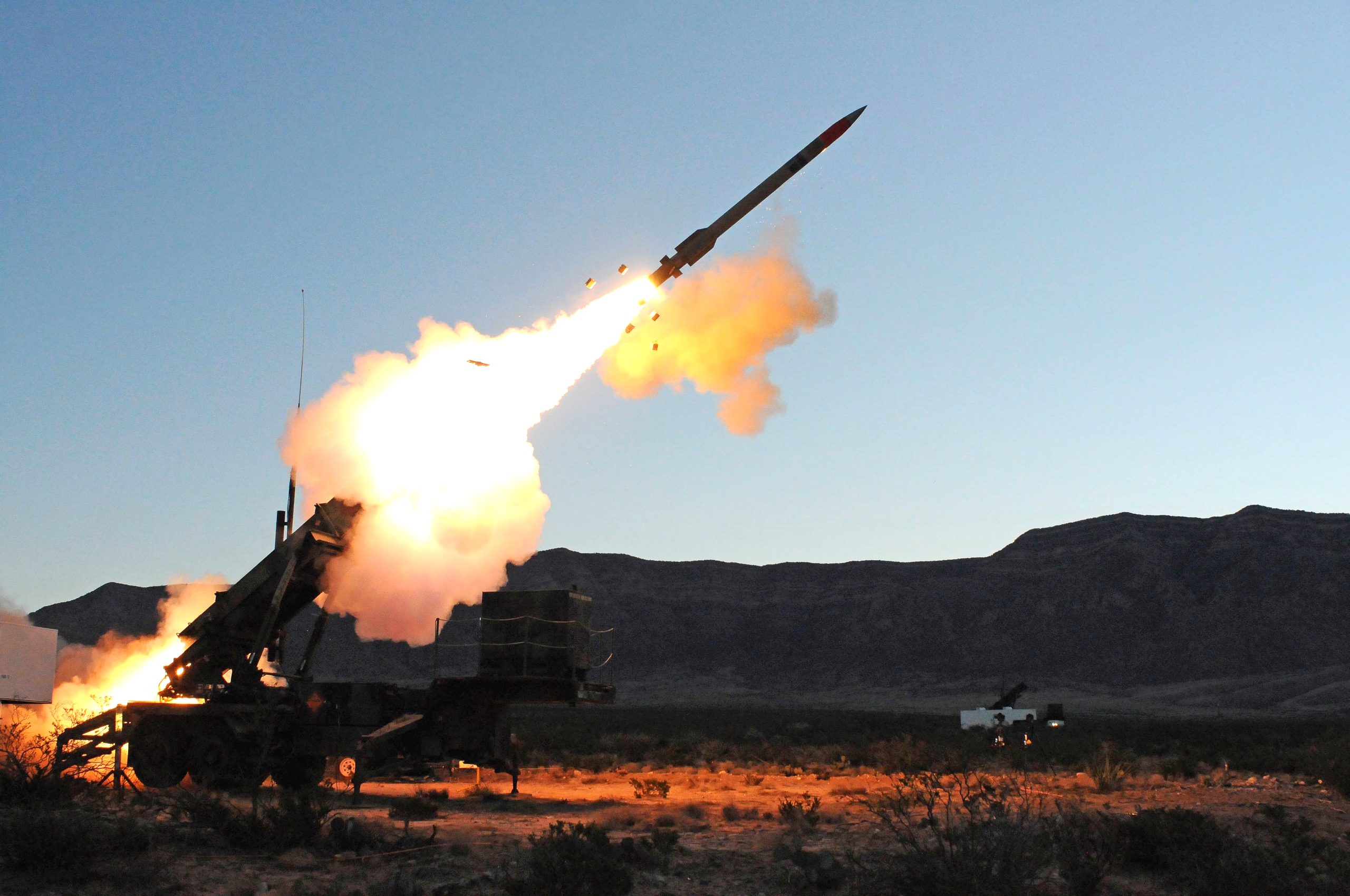
The exorbitant expenditure of manpower, money and munitions provided to an ultimately costly and futile Ukrainian military effort against Russia, has not been in U.S. grand strategic interests, much less other nations in Asia who could have used the investment to counter the Chinese threat more effectively. The United States recent military adventurism in Iran is also bad news for the United States and hence Australia. Every single land, sea and air asset, Patriot, THAAD and Tomahawk missile used in Iran is one less for Asia. Again, men, money and munitions, wasted for largely geopolitical insignificance.
In this context, Australia’s role should extend beyond passive alignment to active, if measured, diplomatic pressure. This should include urging the United States to pursue a diplomatic end to the Ukraine-Russia war and encourage the United States to find an offramp, if possible, with Iran. Such an approach does not imply divergence from the United States. Quite the opposite. It is rather a convergence around shared long-term interests. A United States that remains strategically concentrated on Asia is not only acting in its own interests, but in Australia’s as well. It is imperative that the United States aligns with its strategic interests, so that Australia can best align with its own.The Australian realpolitik necessity
This realignment of Australian foreign policy toward realpolitik and pragmatic raison d’état is needed now more than ever. Beyond questions of resource allocation and strategic prioritisation, there is a further, often overlooked cost to a moralised and expansive foreign policy. The erosion of domestic political credibility. Sustained public support is a critical pillar of any effective long-term strategy. Yet repeated claims that distant conflicts are essential to Australia’s national interest, particularly when the connection appears at best tenuous, and at worst false, risk generating a form of strategic fatigue among the public. Over time, this can produce a “boy who cried wolf” phenomena, in which ongoing threat inflation diminishes the credibility of future government claims. Australian policy makers need to distinguish situations that are a real strategic and survival threat and situations that are just morally reprehensible or a mere inconvenience.Australian leaders in the foreign policy establishment, and Australians at large, should look up to foreign policy leaders of history like Cardinal Richelieu, Lord Palmerston and Otto von Bismarck, true strategists of par excellence status. All three men had their respective national strategic interests at the core of any decision they made. Australian national strategic interests need to be treated as primary. And while rhetoric and support for moral and ideological causes is important, it cannot be prioritised above strategic interests. Once again the true power lies in strategy and the effective allocation of resources. Men, money and munitions.