

Chess not checkers
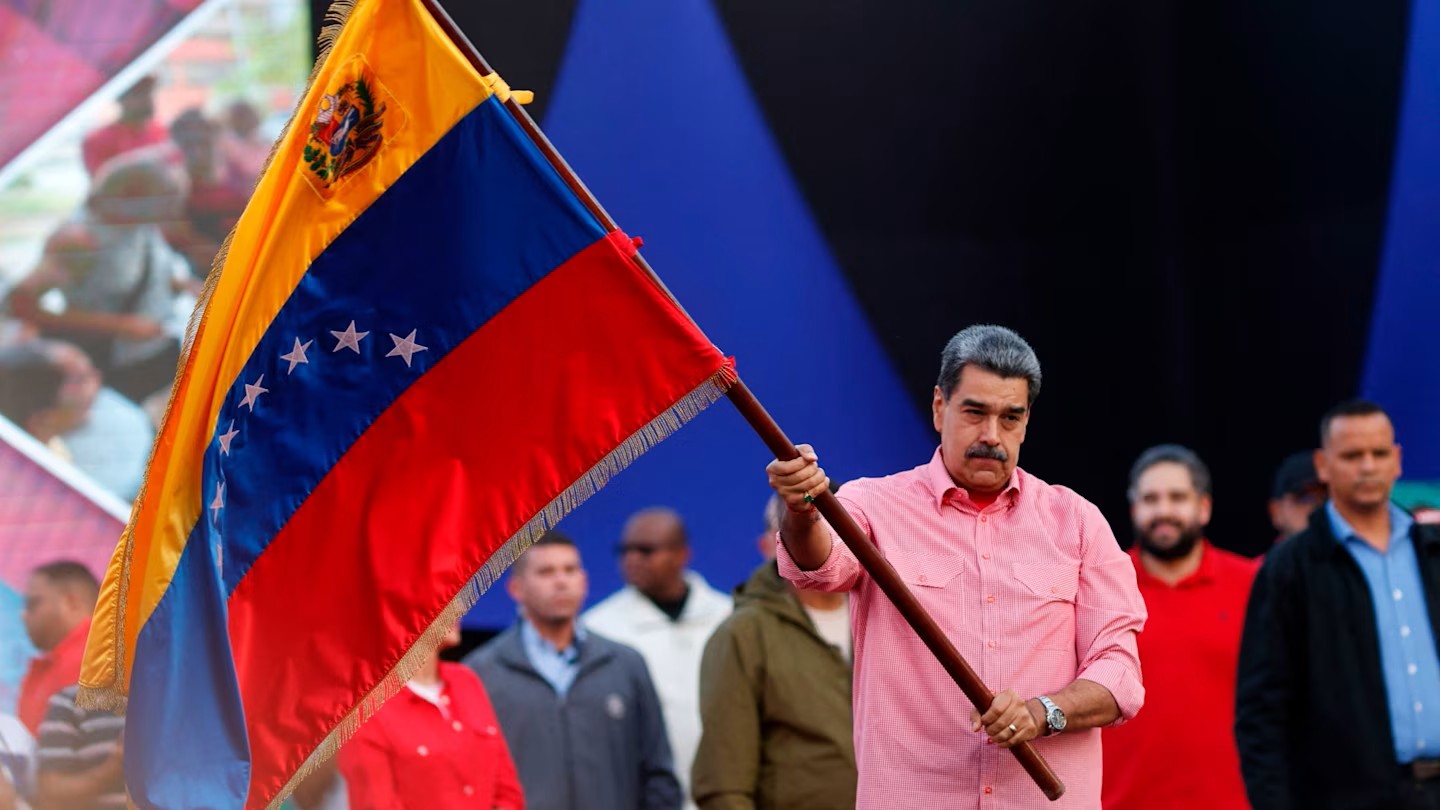
First and foremostly, it must be acknowledged that the U.S military carried out an extremely successful tactical operation. This article will not criticize the professionalism or effectiveness of the U.S. Special Operations Forces, or the armed forces in general, achieving a remarkable tactical victory. Within three hours, U.S forces had captured Nicolás Maduro and brought him into custody, without a single American service member being killed in action. By any military measure, this was a complete and utter tactical success.
However, the U.S has rarely had trouble with the immediate kinetic phase of conflict. The Gulf War, Afghanistan and Iraq amongst countless others, are clear examples of military efficiency and triumph, as it seems only the United States military can. The raid itself isn't the problem. It's what it means for strategy that is. What happens next? Unfortunately, the U.S foreign policy establishment has been unable to answer this question for a very long time.
In the past, different administrations have gone into conflict without a clear plan for what to do after the conflict ceases, instead relying on vague endstates and poorly defined measures of success. This lack of strategy led to long-lasting quagmires in Vietnam, Afghanistan, and Iraq, the so-called "forever wars", where policies that were aimless, unrealistic, and often contradictory lasted for years. These wars cost thousands of lives and trillions of dollars. They had ZERO positive impact on the safety, security and the political interests of American citizens. The American foreign policy "blob," military leaders, and political establishment should all know that doing the same thing in Venezuela will likely lead to disaster.
Moreover, for more than 80 years, U.S. foreign policy experts have been obsessed with leadership and regime change as a way to solve complicated political problems. However, this has often made the problem even worse. As the former CIA intelligence analyst Larry C. Johnson put it, “the notion that all we have to do is replace one guy, and everything will be fixed…is not true”. John Mearsheimer seconds this line of argument by stating that the United States overthrew governments eighteen times during the Cold War, "and not in one single case did we [the United States] produce a stable liberal democracy at the end of the process." The historical record is clear. These kinds of interventions don't make things better, they make things worse. The overthrow of Mosaddegh in Iran, Hussein in Iraq, and Gaddafi in Libya are poignant examples in the historical record. It would be foolish for the Trump administration to think that Venezuela would be any different.
In the end, the effects of this event are what really matter, not the raid itself. Carl von Clausewitz, the famous Prussian military theorist, said that "war is the continuation of politics by other means." If that's the case, the Trump administration needs to clearly explain what its political goal is and how this action helps U.S. national security interests. Sadly, there isn't much proof that such a plan exists.
A Pyrrhic victory for the United States
It is important to recognize that the United States has real economic and ideological interests in Venezuela. Venezuela has the largest proven oil reserves in the world, but it only produces a fraction of an amount compared to other OPEC countries. The United States would have a huge economic opportunity if it could control these reserves. Venezuelan crude is also mostly heavy oil, which is perfect for U.S. refineries as their refinery infrastructure is already in place to handle heavier hydrocarbon compounds.
There is still some disagreement about how an increase in oil supply would affect the U.S economy, but ceteris paribus (everything being equal), Venezuelan production coming back online should lower oil prices. This would help American consumers with much needed economic relief and give Trump political benefits at home. It goes without saying that Washington is also ideologically interested in replacing a soft socialist authoritarian regime with a government that is more in line with U.S. liberal democratic values.
However, the potential benefits of these actions are far outweighed by the many strategic consequences they are likely to incur. Putting aside the implications of international law and the ramifications on U.S congressional law, huge topical debates in their own rights, the strategic consequences that may potentially eventuate from this decision, from my perspective, is the most important aspect.At his first press conference after the Maduro raid, President Trump said that the U.S would "take control" of Venezuela. He said this was necessary to control the country's oil industry and reserves. However, the logical question to arise from this concerns the definition of control. As has been made abundantly clear in recent U.S global conflicts, controlling a piece of territory takes much more than just a naval blockade or air superiority. It takes boots on the ground to seize and hold terrain. Then and only then, can an actor be said to control territory. If Trump plans on carrying the burden of controlling Venezuela, he by definition will need an armed force in the country, making a committed and protracted military campaign evermore likely.
The consequences of this action should not be minimized. Any occupying force would likely need to be in the number of hundreds of thousands, which would be a military commitment on a scale not seen since Vietnam. It is hard to believe that Trump has the political capital at home to carry out such a plan, especially since he ran for office as the "anti-war" candidate who wanted to focus on fixing problems on the home front rather than getting involved in wars abroad.
I contend that if Venezuela was an actual security threat to U.S regional hegemony in the Western Hemisphere, then the price would be worth paying. That is not the case, and that is not what this is about. Venezuela does not pose a strategic or security threat to the United States. The Trump administration has tried many times to invoke the spirit of the Monroe Doctrine to justify their actions in Venezuela, but the Monroe Doctrine was primarily a strategic and national security philosophy that helped maintain a favorable power balance for the United States in the Western Hemisphere. The Monroe Doctrine was NOT a philosophy of economic imperialism and ideological supremacy that the United States could invoke carte blanche to justify military action on other states in the Western Hemisphere.
The Trump administration has relied on deliberate ambiguity, misusing realpolitik and geopolitical language to justify stealing resources from another sovereign state. It has tried to make a case for security by listing Venezuelan criminal groups "terrorist organizations" and using the term "narco-terrorism" ad nauseum. This does not stand up to intellectual scrutiny. Not only does Venezuela play a much smaller part in the drug trade than countries like Colombia, Mexico and a host of other Latin American nations, but most Venezuelan originated criminal cargo is cocaine - on its way to Europe, not the U.S.
It is hard to ignore how similar this sounds to the Bush administration deliberately using the "Weapons of Mass Destruction" story to justify the 2003 invasion of Iraq. An exaggerated and false security threat pretense, that was used to get the American citizenry onboard with military action. It seems more and more like U.S. foreign policy is a leopard that can't or won't change its spots.
The lack of a credible plan for regime change is also worrying. When asked about what would happen after Maduro, President Trump gave vague promises that the government was working on it. In the meantime, Venezuelan Vice President Delcy Rodríguez is under a lot of pressure from both sides. The U.S wants compliance from above, threatening more strikes and economic ruin. Meanwhile, Venezuelan public opinion calls for resistance to foreign control and the breadth of military officials and aristocrats that are ingratiated and have benefitted from the corruption of the Chavez-Maduro regime, creates a powerful political force from below. Nationalism is a strong political force, so it shouldn't be surprising that Venezuelans want to have a say in decisions that will shape their country's future. Only 3% of Venezuelans are for U.S. military intervention. This strongly suggests that there is a possibility of an armed uprising if the people's wishes are not taken into consideration. As shown many times during the Cold War, in Afghanistan, Iraq, and Libya, regime change backed by the U.S. often leads to long-lasting insurgency, civil war, and state collapse instead of stability. Trump further added to the confusion by publicly denouncing the recent Nobel Peace Prize winner and opposition leader Maria Machado, who was tipped by most foreign affairs analysts to be the stand in choice for Maduro, did not hold the legitimacy of the Venezuelan public and that in Trump's words “it would be very tough for her to be leader”. A recent poll found that 91% of Venezuelans held an unfavorable view towards Machado. This leaves many questions as to which Venezuelan leader will be administering the nation in the short to medium term, if at all. The sheer lack of command and control seems to be a problem that Trump is going to have to deal with immediately if the regime change option is to stand any chance of success.China: the real winners?
There has been overwhelming commentary stating that the success of this recent U.S military operation in Venezuela has shown China the dominance and the extent that Washington is willing to go to protect their national interests. People who advocate this perspective say that the Trump administration has taken strong steps to protect U.S. national security by cutting off an energy exporter and tacit economic partner of Beijing. I find this line of argument unconvincing on two counts.
Firstly, Chinese oil imports are extremely diversified. Only 4–5% of China's total crude oil imports come from Venezuela. No serious scholar of international relations or foreign policy could credibly rationalize the potential repercussions and strategic hazards of the Maduro raid predicated on a negligible disruption to Chinese energy supply. This assertion disintegrates under even immediate examination of the facts and seems to serve primarily as a political talking point rather than a legitimate strategic justification.
Second, and much more worrying, the chances of escalation and the creation of a long-term military theater in Venezuela go directly against American grand strategic interests. Trump's limited military actions abroad, like strikes in Syria and Nigeria, were mostly in line with his public opposition to "forever wars." However, his vocal stance on Venezuela is very different. The President made it clear that the U.S. would "run" and "control" Venezuela. As has been previously mentioned, the capability to do this indicates a much larger, long-term military presence and a wide-ranging campaign.
If this happens, it would be another blow to the U.S. "pivot to Asia" strategy that was first announced in 2011 and has been followed, at least in words, by every administration since George W. Bush. If the United States is truly dedicated to counterbalancing China, its sole strategic competitor and rival, involvement in a significant conflict in the Western Hemisphere is strategically illogical. As I have long said, opportunity cost is what decides security, just like all other policy choices. U.S. military, equipment, and political capital are limited. To counter China, which by all accounts is a larger threat than any of America's past strategic competitors, like Imperial Germany, Imperial Japan, Nazi Germany, and even the Soviet Union, the United States needs to focus laser-like on the Asia-Pacific region. Any deviation, like Ukraine in Europe, Israel-Palestine and Iran in the Middle East and now seemingly Venezuela in the Western Hemisphere, is manpower and money not spent in Asia. The question the U.S administration should be asking itself is, does it make sense to go to war or into the business of nation building in Venezuela while there is the very real strategic competitor of China looming large in Asia? No. No it does not. Chinese security and military officials would surely be looking at a serious U.S commitment to Venezuela as a window of opportunity to implement their own strategic vision. Many in the Chinese Communist Party would surely reason that there might not be a better opportunity to strike in Taiwan, or implement more aggressive policy towards Chinese interests in the East China Sea or the South China Sea with America being distracted and pinned down in other regions of the globe. Much of the praise for the Trump administration has been based on triumphalism, excitement, and performative bravado. However, recent history should serve as a warning. The picture of President George W. Bush standing on the USS Abraham Lincoln in May 2003 under a "Mission Accomplished" banner is still a strong reminder of how quickly tactical success can turn into strategic failure. One can only hope that Venezuela doesn't face the same fate. Sadly, hope is not a strategy.