


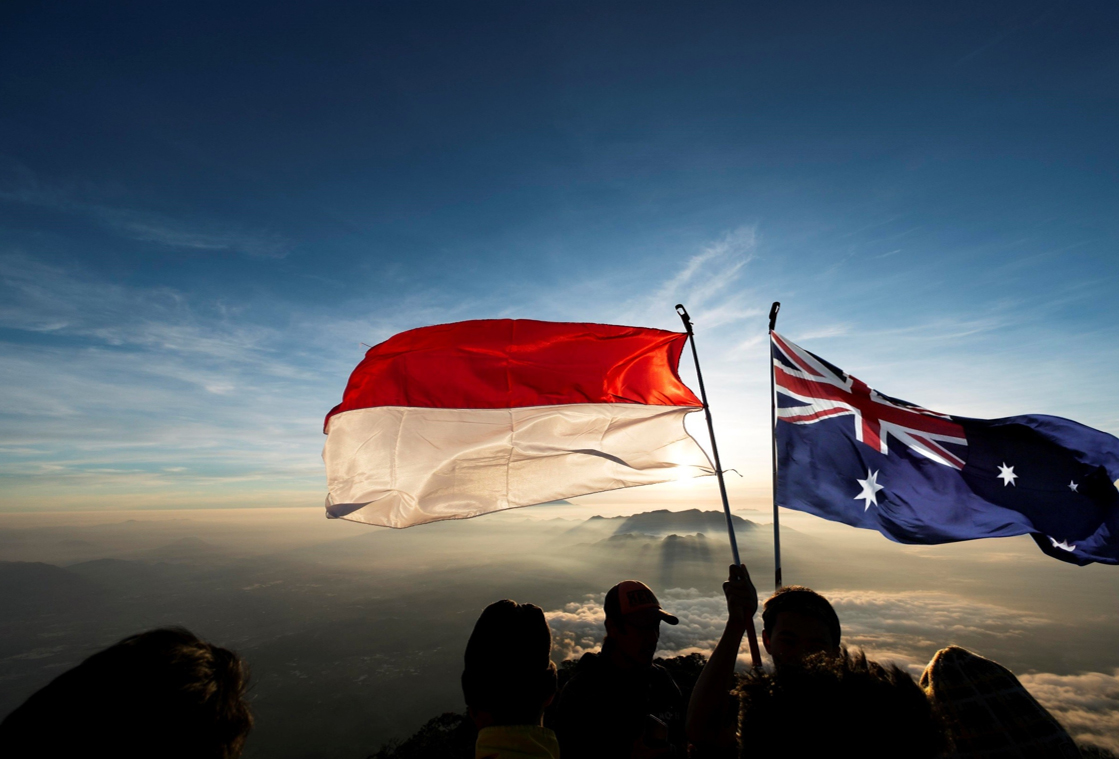
The Indonesian situation on our doorstep
It is undeniable that Indonesia possesses all the hallmarks of a regional power in waiting. Its latent power, defined in realist theory as the combination of population size and economic capacity, is steadily growing. Realist scholars argue that such latent power is often, perhaps inevitably, converted into military capability, the principal instrument through which states project influence and protect their national interests.
Population provides the foundation for this transformation: it supplies labour for industrial growth, manpower for a skilled workforce, and critically, personnel for the armed forces. Indonesia’s population already exceeds 280 million and is projected to reach 300 million by 2030, placing it among the five most populous nations in the world.
Economically, while Indonesia does not yet meet the benchmarks of an advanced industrial state, its trajectory is striking. By 2050, it is projected to hold the world’s fourth-largest GDP. The government’s Vision 2045 sets the target of achieving developed-nation status through expansion of the middle class and major investment in infrastructure, manufacturing, and services. While China and India will continue to dominate the Asian mainland, Indonesia is poised to become the preeminent economic force in Southeast Asia.
Of course, forecasts in international politics are notoriously uncertain. Even if Indonesia’s latent power matures as expected, Jakarta must still convert it into actual military capability, a process influenced by leadership priorities, budgetary choices, and strategic vision.
There are already signs of such a conversion. Defence Minister (and now President-elect) Prabowo Subianto has pledged to raise defence spending to 1.5% of GDP by 2029 and to establish 22 new regional army commands. Ceteris paribus, if these plans are realised and historical trends hold, Indonesia could emerge as a genuine regional great power by mid-century.
In the near term, both Australia and Indonesia share a strong interest in counterbalancing China’s assertiveness. This is reflected in expanded bilateral defence cooperation, such as Exercise Keris Woomera, and in the notable easing of tensions that marked the early 2000s. Yet this raises a longer-term question for Canberra: should Australia seek to anchor its strategic future in close alignment with an increasingly powerful Indonesia, or prepare for the possibility that today’s partner could one day be tomorrow’s peer competitor?
Why should Australia be cautious of a rising Indonesia?
From a realist perspective, the relative future rise of Indonesia necessitates a relative decline in Australian power in the Indo-Pacific. Furthermore, as Australia’s geographically closest neighbor, the geopolitical calculus in Canberra of Indonesia as a potential threat is certainly becoming more and more real by the day.
At the moment, there seems to be an incessant belief within the hallways of Canberra that if we engage with Indonesia, diplomatically, economically, and culturally, Australia can create a meaningful bilateral understanding and quasi-alliance structure with Jakarta, creating a sentiment of goodwill, which will be especially useful for when Indonesia translates its latent power into military power later in the century.
Unfortunately, the recent historical record for economic and diplomatic engagement with a rising power in the hopes of preventing a future security dilemma is not strong. One should look no further than the US policy to engage China in the 1980s and the decades beyond for proof that economic, diplomatic, and cultural engagement is no guarantee of security provisions for the future. The US believed that bringing China into the fold of international institutions like the WTO, IMF, and World Bank, and also trading extensively with the nation, would cause the PRC to realize democratic, capitalist, liberal values on the home front. They also placed a high premium on the predicted strength and soft power that “basketball diplomacy” would have on Chinese society. With the NBA having such a strong support base in China, US foreign policy “experts” thought that a certain level of cultural immersion and osmosis would occur within the Chinese state.
This “liberal worldview gamble” couldn’t have backfired any more fantastically for the US. China has remained an authoritarian, repressive state, and has now become the United States' main strategic competitor for hegemony over East Asia and Southeast Asia regions. Many realists criticize US foreign policy for engaging China to the extent it did and de facto assisting the rise of the United States' largest strategic competitor in history. This is true, even if a certain level of engagement was initially needed to coax the Chinese away from the Soviets to achieve the geopolitical mastery of the Sino-Soviet split in the 1970s and 80s. The hell of good intentions (not ironically the name of prominent realist Steven Walt’s bestselling book on US shortsightedness in the realm of foreign policy for the past three decades).
The underlying problem with this rapprochement strategy is that it relies too heavily on the predicted benign nature of the power attempting to be balanced. The US tried it with China. It didn’t work. The Australian government would be foolish to place blind faith in a similar approach to Indonesian preeminence at the turn of the half century.
The Indonesian government would be rational to realize and consolidate its power for the remainder of the century. Like many of the historic Oriental nations, Indonesia knows what it is like to be weak. Its memory of being taken advantage of by stronger, imperial powers like the Dutch, British, and Japanese empires has forced an embedded realism within the nation's foreign policy elites and political leaders. Thus, we should expect Indonesia to assert its ever-strengthening position in the region, in a calculated yet forthright manner. It is only what a rational, wise, and intelligent foreign policy actor would do if they had similar cards to the ones the Indonesians have been dealt.
How should Australia posture its future relations with a rising Indonesia?
We, as an Australian society, need to adapt to the self-interested, multipolar, and realist environment that the Asian region is quickly becoming. No longer can we conflate ideological similarities and strong economic relationships with raison d'être and grand strategy, primarily a function of a power and security-oriented world. We further need to fix our understanding of alliances from a conception of friendship to a temporary marriage of convenience in response to a mutual interest. Nations with a shared threat perception and realistic assessment of Indonesia’s rise, like Malaysia, Singapore, and the Philippines, will likely provide valuable alliance partners going into the future.
Our ignorance towards realism is partly caused by Australia’s blessed geography, which has seen us absent from a conventional invasion since federation. Australia does not have the same fear of invasion as continental powers such as India, China, Russia, Germany, France, and Iran due to its isolation and relatively peaceful history. It also hasn’t experienced the same level of exploitation by colonial and imperial powers, such as Indonesia, Japan, and other Asian nations, which all have vivid histories and memories of the consequences of being relatively weak in the international system.
This is also a vestige of our domestic liberal worldview, which I am profoundly proud to have grown up in, but needs to be reformed and fit for purpose in the modern age. While of course, there are better and worse systems domestically, and Australian and Australians would prefer to ally with nations who share our commitment to democracy, individual liberties, and market-based economic systems, we need to start treating potential alliance partners as black boxes, devoid of everything other than the marginal power benefit to Australia. They are groups and tools that, if skillfully manipulated by a wise, cunning, and adaptable foreign minister, can lead to prolonged Australian longevity, peace, and security.
This might seem harsh and a somewhat abrupt change to Australia’s foreign policy stature, but it is seemingly the direction in which our Asian neighbors are going. There are a plethora of examples like India, China, and Indonesia, acting with realpolitik being the primary motivating force behind foreign policy decisions. We need to follow suit. While it might be initially hard for Australians to stomach, pure cold-hearted rational power calculus must be the primary focus of our foreign engagement. A true multipolar Asia is headed our way. Being pragmatic about the threats we face and the allies we choose to balance these threats is the best way for Australian longevity and prosperity to continue long into the 21st century.